

What TSA screens
Checkpoint activity is rarely related to substances at all. Agents are trained to catch weapons, explosives, and liquids over the carry-on limit, and an edible shaped like an ordinary gummy or chocolate bar rarely stands out on a monitor. X-ray equipment reads outlines and density, not what’s actually inside.
That said, people keep asking whether can you fly with THC edibles without getting pulled aside, and the real answer hinges less on how something is wrapped and more on the gap between federal rules and whatever the state allows. TSA answers to federal law first. Cannabis remains a controlled substance under that law, no matter what the departure or arrival state has decided on its own.
If something does raise a question, agents typically hand it off to local police rather than seize it outright, though this isn’t universal. Airport security exists to keep flights safe, not to police drug possession, so finding an edible in a bag doesn’t automatically turn into a legal incident. A lot depends on which airport, who’s working that shift, and how much attention any individual staffer decides to give it.
Why packaging matters?
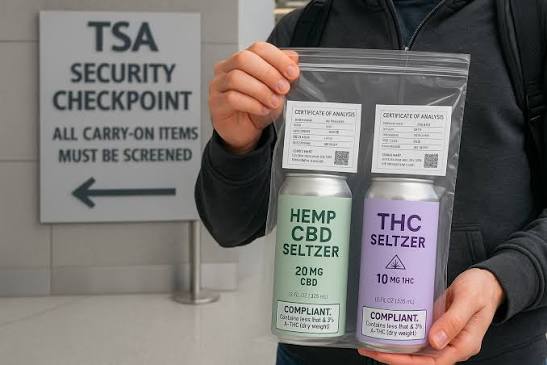
An item sealed and labelled draws a lot less scrutiny than one that isn’t.
Foil-wrapped edibles, or anything sitting in an unmarked container, can look homemade, and that alone sometimes invites a question or two, not because anyone assumes wrongdoing, but because there’s nothing to confirm what it is. Original packaging with an ingredient list on it answers that question before it gets asked.
- Sealed pouches from a manufacturer move through scanners without the ambiguity that loose items create.
- Clear labelling keeps an edible from being mistaken for something else entirely.
- Grouping items in one section of a bag speeds up any manual look, if one happens.
- Crumbs and loose residue are worth avoiding since swab tests occasionally flag a bag over almost nothing.
Scanning technology limits
Imaging equipment picks up shape and density. It has no way of identifying what’s chemically inside something, which is exactly why candy-shaped edibles tend to slide through without comment.
Swabs used in follow-up checks work on a different principle entirely, testing for residue left on surfaces, wrappers included. Sensitivity settings vary, and a positive reading doesn’t always mean cannabis is actually present. Residue picked up from an unrelated surface has been known to set off a false result, which then requires someone to check further by hand.
After the landing rules
Getting through departure only covers getting on the plane. Everything about what’s legal to possess resets once a traveller steps outside the arrival airport.
Whatever state a flight lands in decides what happens next, and that has nothing to do with what happened, or didn’t happen, back at departure. Landing somewhere, cannabis is still illegal, which means local law applies in full, and no amount of smooth boarding changes that exposure once someone’s actually on the ground there.
Travel involving THC edibles sits right at the edge of federal procedure and state law that shifts from one border to the next, and what happens at any given checkpoint often comes down to details nobody flying can fully predict ahead of time.